powered by

💡Want to work with Sam? (3 options below):
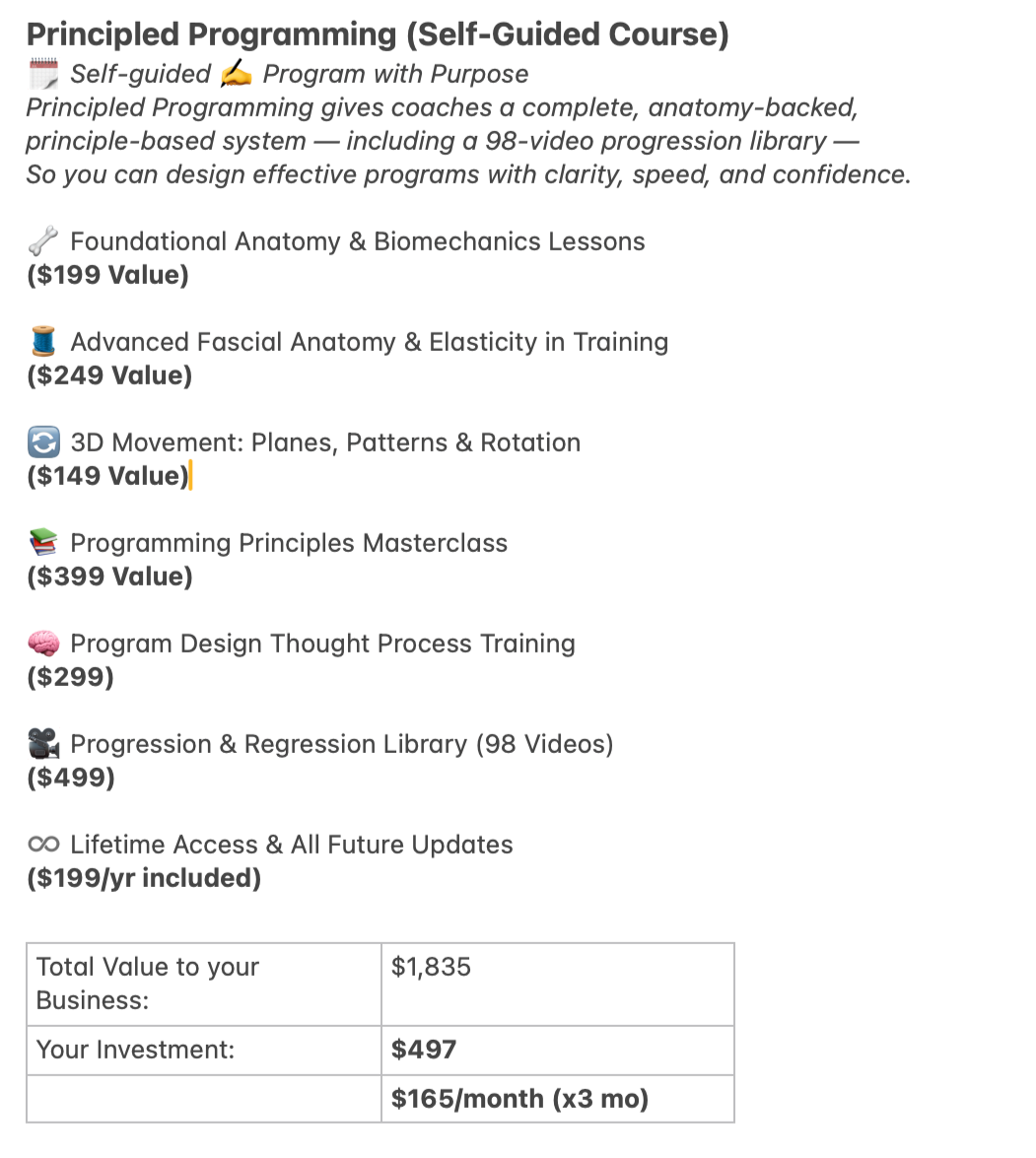
1️⃣ - Principled Programming Course $497 (Learn to design programs for any client) 👉 CLICK HERE
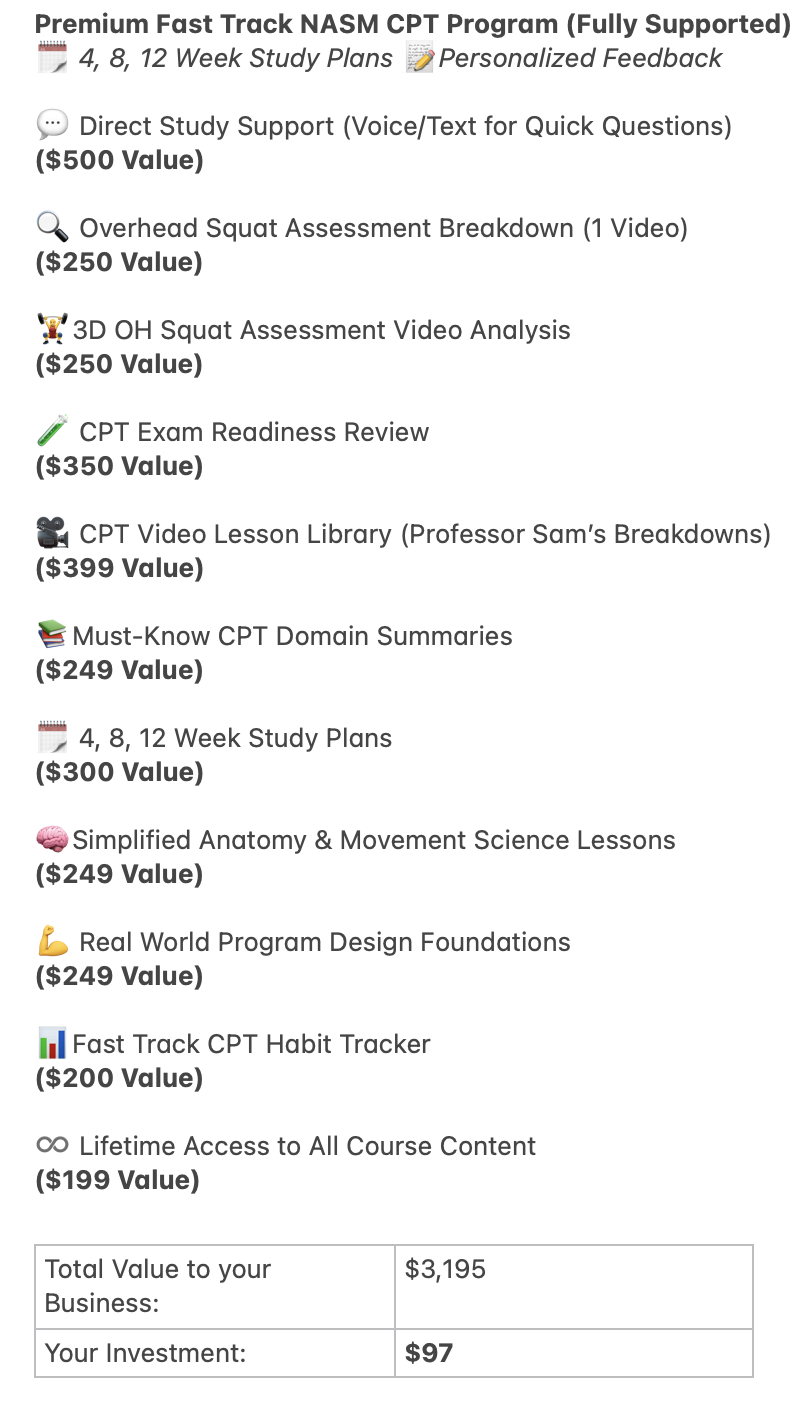
2️⃣ - Fast Track NASM CPT Study Support $97 (4-8 Weeks) 👉 CLICK HERE
3️⃣ - Chat w/ Sam - (Book a FREE Zoom call to see if we’re a good fit for mentorship) 👉 CLICK HERE
THE COACHING CUEING CHEAT SHEET
Practical cues for the most common exercises coaches struggle to teach.
This quick reference guide includes cueing strategies for:
Squat
Hinge
Push-ups
Overhead press
Lunges
Rows
Pull-ups
Cleans
Plus the coaching frameworks that make cues actually work.
Before We Dive In…
Most new coaches don’t struggle because they lack knowledge.
They struggle because they say too much, too soon.
The best coaches communicate movement with clarity, precision, and timing.
That’s what this guide is about.
Cueing Framework
Great coaching uses multiple communication channels to deliver precise cues; little snippets of information, or task-oriented information, to teach an athlete how to perform the task/skill.
Verbal
Short, clear instructions that direct attention.
Example:
“Push the floor away.”
Pro-Tip
External cues are generally more effective than internal cues. Be sure to give time and silence for athletes to learn and perform.
Visual
Show the movement before explaining it.
Athletes often learn faster by seeing the movement first.
Example: Demonstrate the movement
Pro-Tip
Never program an exercise you have not done yourself nor attempted to become proficient in.
Tactile
Light physical guidance to help an athlete feel the correct position.
Example:
Touch the lats during a pull down to help the mind muscle connection.
Pro-Tip
Use the back of your hand, a knuckle, or a PVC pipe to provide a tactile cue with respect.
Energy Flows Where Attention Goes
Internal Cues
Focus on body movements.
Examples
“Extend your hips.”
“Drive your knees out.”
“Brace your core.”
Best for
• hypertrophy
• rehab
• mind-muscle connection
External Cues
Focus on the outcome of the movement.
Examples
“Push the floor away.”
“Punch the ceiling.”
“Drive the bar up.”
Best for
• force production
• coordination
• athletic performance
Normal Cues
Focus on giving space for normal focus.
Examples
“Make it look easy!”
“Stay tall.”
“Follow through".”
Best for
skill acquisition/retention
Movement Cue Library
Start with external cues whenever possible.
External focus often improves coordination, force production, and motor learning.
Squat
Common Movement Faults:
• Knees collapse inward
• Chest collapses forward
• Heels lift off the floor
Internal Cue
Sit your hips down and back.
External Cue (Direction)
Spread the floor.
External Cue (Distance / Description)
Push the ground away as you stand.
Hinge
Common Movement Faults:
• Squatting instead of deadlifting
• Rounding through the low-back
• Leaking tension through mid-upper back
Internal Cue
Push your hips back.
External Cue (Direction)
Close the door with your hips.
External Cue (Distance / Description)
Reach your hips toward the wall behind you.
Overhead Press
Common Movement Faults:
• Bar/dumbbells drift forward
• Elbows drift wide while shoulder internally rotates
• Excessive low back arch
Internal Cue
Stack ribs over hips.
External Cue (Distance/Description)
Stack your arms.
External Cue (Direction / Description)
Brace and close the scissors.
Push Up
Common Movement Faults:
• Hips sagging
• Elbows flaring
• Limited depth
Internal Cue
Brace your core like a plank.
External Cue (Direction)
Push the floor away.
External Cue (Distance / Description)
Bring your chest to the floor.
Lunge
Common Movement Faults:
• Chest falling forward
• Losing balance
• Knee collapsing inward
Internal Cue
Stay tall through your torso.
External Cue (Direction)
Drop your back knee straight toward the floor.
External Cue (Distance / Description)
Lower your knee straight down beneath your hip.
Row
Common Movement Faults:
• Pulling with arms only
• Shoulder shrugging
• Losing posture
Internal Cue
Squeeze your shoulder blades together.
External Cue (Distance/Description)
Drive your elbows behind you.
External Cue (Direction / Description)
Pull the handles to your ribs.
Pull Up
Common Movement Faults:
• No scapular engagement
• Swinging excessively
• Incomplete range of motion
Internal Cue
Pull your shoulder blades down first.
External Cue (Direction)
Drive your elbows toward the floor.
External Cue (Distance / Description)
Pull your chest to the bar.
Clean
Common Movement Faults:
• Early arm pull
• Lack of full hip extension
• Slow turnover
Internal Cue
Extend your hips explosively
External Cue (Direction)
Jump and shrug up.
External Cue (Distance / Description)
Drive the bar straight up close to your body.
Universal Cues
Lower body
These work across many lower body movements:
Push the floor away
Spread the floor
Reach your hips back
Grip the ground
Soft knees
Stay stacked
Upper body
These work across many upper body movements:
Drive your elbows back
Pull your chest to the bar
Punch to the ceiling
Stay stacked
Squeeze the bar
Break the bar
Principled Programming (Self-Guided)
Premium Fast Track NASM CPT (Fully Supported)
I’m Coach Sam Arnold.
I coach and mentor personal trainers who want to build sustainable careers — not just survive on caffeine and chaos.
I’ve seen too many good coaches burn out not because they didn’t care enough, but because they didn’t learn the skills that actually support the demands of this job.
This guide is a starting point.
🤔 Not sure if this is the right fit for you?
❓ Have some questions you want to ask before signing up?
👉 Click Here to schedule a Free Zoom Chat with Sam.
